Sound familiar?Orchard Heights
- The call
- Overnight someone forced the back door, and the cylinder face is scarred, the metal around the strike has pulled loose from the frame, and the latch no longer sits flush.
The electric strike buzzes the moment the receptionist presses the release button, but the door still needs a shoulder to get past the latch, as though the two pieces were never matched.
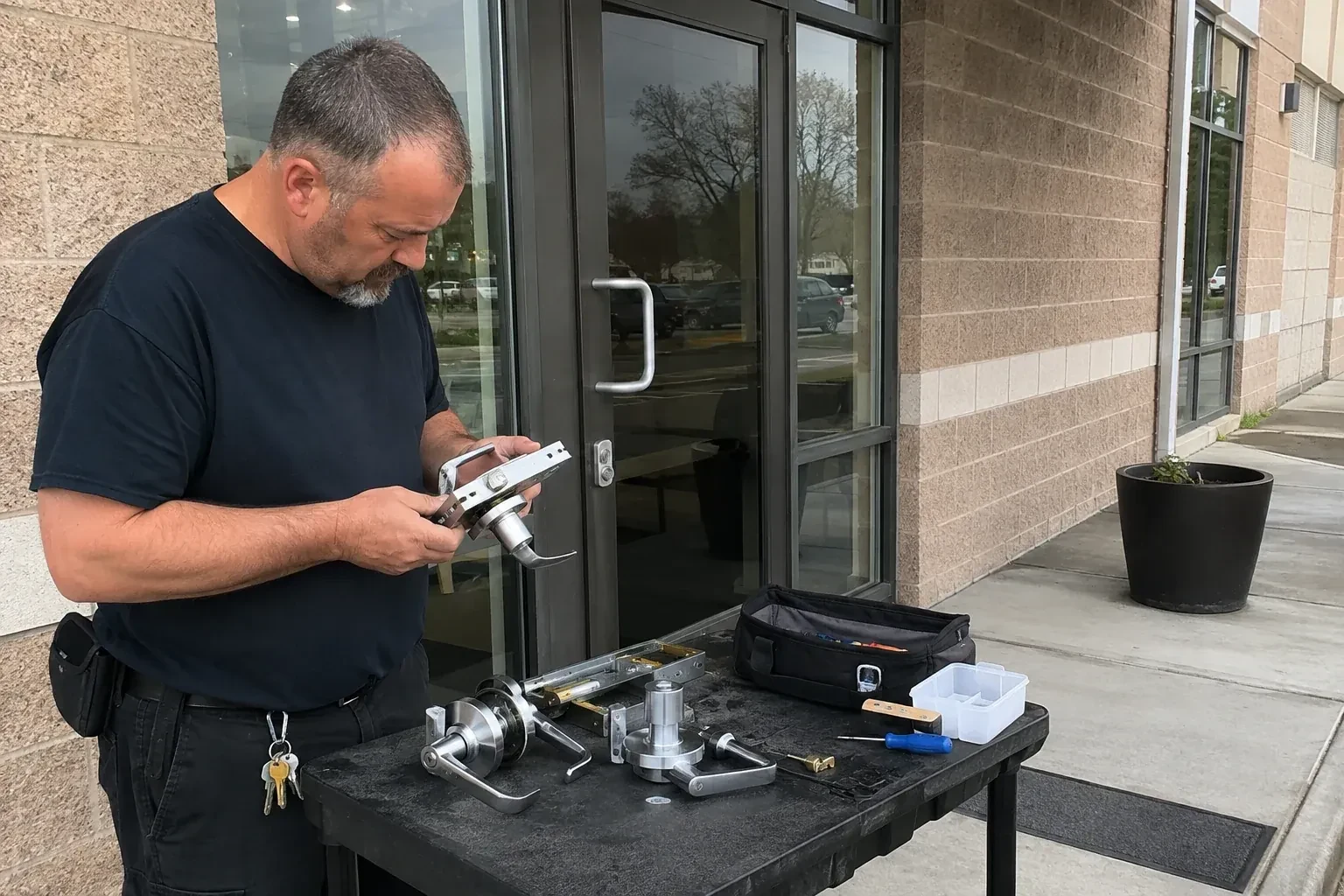
Businesses often reach this service after something specific happens: a break-in, a departing employee holding a working key, a lease turnover, or an inspector's note about the rear exit. Whatever the trigger, the work itself follows the same order. The locksmith assesses the door and its current hardware, agrees with an authorized contact on the keying the new lock should follow, fits hardware rated for the opening's construction and use, and connects it to anything else already wired into that door, such as an alarm contact or an access-control reader, before testing and handing the keys over.
Sound familiar?Orchard Heights
Commercial-Grade Lock Replacement · Orchard Heights
Scene 1
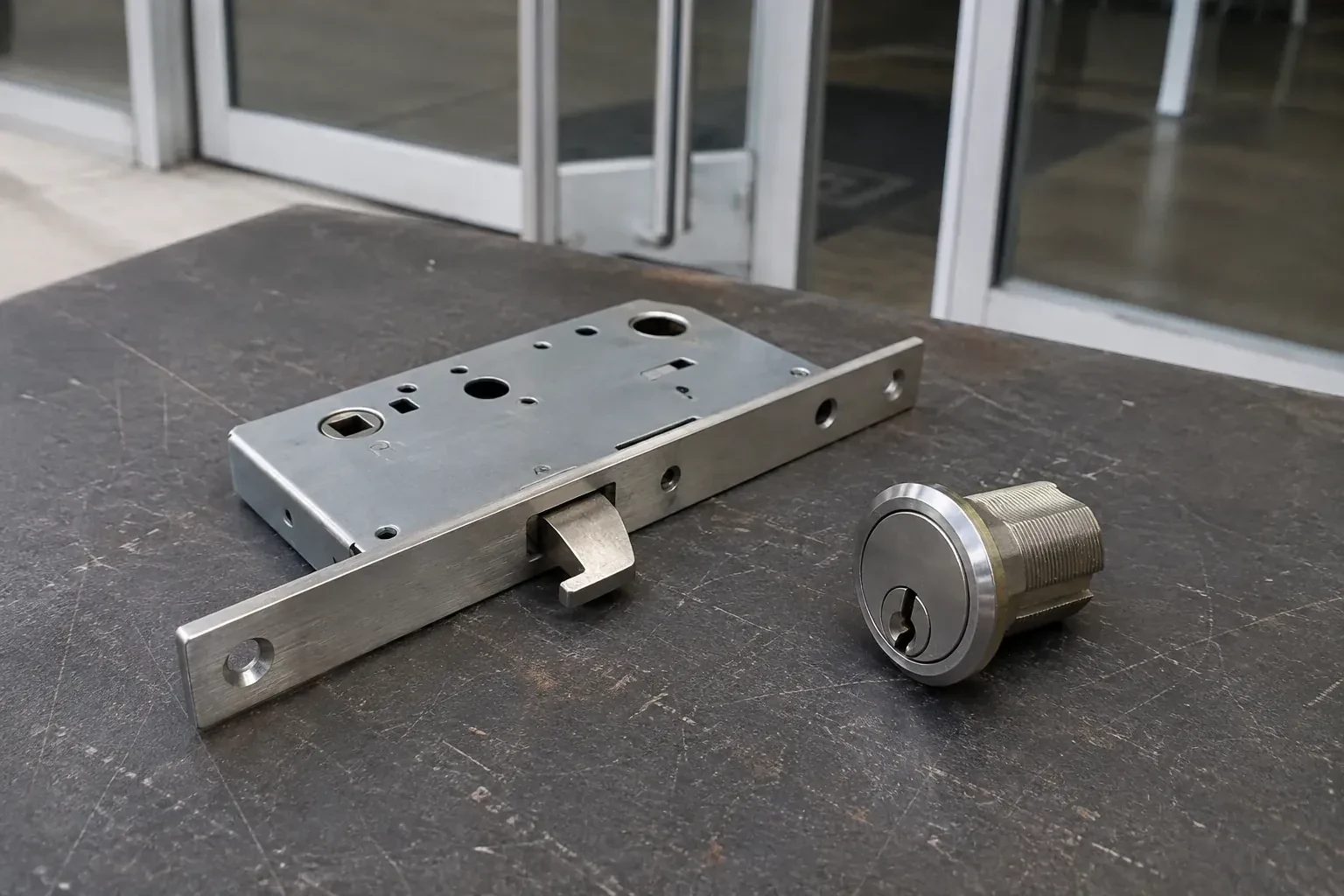
Every commercial building runs some kind of keying logic, even an informal one, and the locksmith maps it before touching hardware: is this cylinder on the same key as other doors, does it belong to a master or grand-master system, is it a standard keyway or a restricted one that only a specific supplier can cut? Getting this picture first means the new hardware can be ordered to slot into that structure, onto a fresh structure the business wants instead, or left standing alone if that is genuinely what is wanted.
Scene 2
The finished hardware is cycled from both sides, under the door's normal swing and closing force, and by more than one person where staff are on site to try it, since a lock that operates cleanly for one hand may bind for another depending on height and grip. Any electric strike or reader tie-in is triggered several times to confirm consistent release. Only once the hardware performs the same way on repeated tries is the work considered finished rather than merely installed.
Scene 3
The business is left with hardware sized to how the door is actually used: a mortise lock body or heavy cylindrical lockset that can take the traffic of a busy entrance, or a narrow-stile lock built for the aluminum frame it is mounted in rather than adapted to it. Staff can be shown how the new hardware feels different from the old one, whether that is a firmer latch, a smoother deadbolt throw, or a different key profile, so nobody is caught off guard by hardware that behaves differently from what they are used to.
What shapes the quoteMarkland Woods Locksmith Co.
FeesSame any hour
Commercial-grade hardware is built for far higher cycle counts and rougher daily handling than a home lock ever sees: heavier internal components, a lock body and strike designed to take repeated forceful use, and often a rating tied to an industry grading system that measures cycles and impact resistance. A residential deadbolt fitted to a busy business door tends to wear out well before its time because it was never built for that volume of use.
Often, yes, particularly with an interchangeable-core system where the core is designed to be swapped without removing the lock body from the door. Where the lock body itself is worn, damaged or of a grade that no longer suits the door's traffic, replacing the cylinder alone would leave the underlying problem in place, so the locksmith says which option actually fits the situation found.
In most cases, yes. Replacement hardware is chosen to fit the door's existing mortise pocket, bore pattern or narrow-stile prep, so the visit does not usually involve altering the door itself. Re-cutting only comes up when the business specifically wants to change hardware type, for example moving from a knob-and-deadbolt pair to a single mortise lock body.
PeelOntario
Commercial-Grade Lock Replacement · Mississauga, Applewood Hills, Markland Woods, Applewood Heights
Every square is one home in a hundred.
On-site assessment
The electric strike buzzes the moment the receptionist presses the release button, but the door still needs a shoulder to get past the latch, as though the two pieces were never matched.
(289) 805-2539, open 24/7.
On-site assessment preferred · (289) 805-2539, open 24/7